Brazil & EU Tackle Fertilizer Dependence
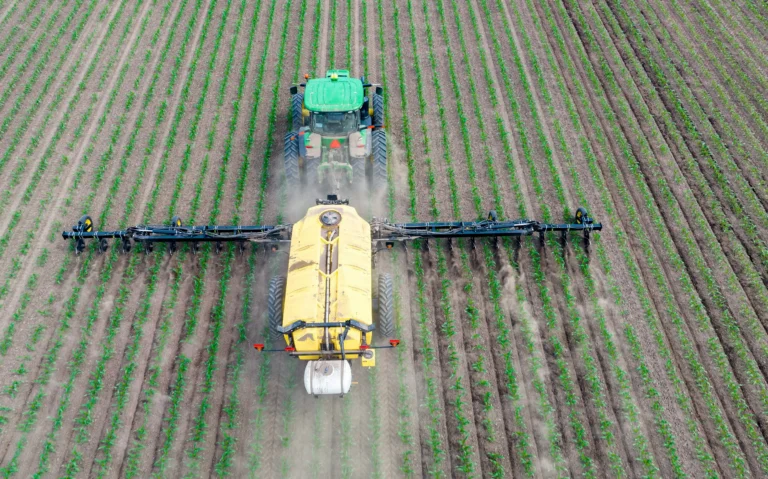
Brazil and the European Union are both working to lessen their reliance on fertilizer imports amid global price volatility and supply risks. Recent crises, including COVID-19, the war in Ukraine, and conflicts in the Middle East, have exposed vulnerabilities in agricultural supply chains.
The World Bank recorded fertilizer price increases of 104% in 2021 and 55% in 2022, followed by corrections in 2023 and 2024, but prices are again rising in 2025 and are projected to increase by over 30% in 2026. Both Brazil’s Plano Nacional de Fertilizantes 2050 and the EU’s new action plan aim to address these challenges, though the EU plan places greater emphasis on economic security, energy transition, and productive autonomy.
Brazil imports 80-85% of its fertilizer needs, while the EU imports 30% of its nitrogen, 70% of its phosphorus, and 40% of its potassium. The EU plan integrates decarbonization into commercial norms, incentivizing low-carbon fertilizers, and promotes a circular economy for nutrients, treating waste as a resource. Brazil can learn from these approaches to update its own plan, particularly regarding incentives for green nitrogen and leveraging its leadership in Biological Nitrogen Fixation.
Surfaced by the Solutions lens — one of the vital signs ovr.news reads.
How we evaluated this
AI summary
read the original for the full story — Read on nexojornal.com.br . How we work →