Global Poverty fell sharply over recent decades
Summary and headline written by AI from the source article. How we work
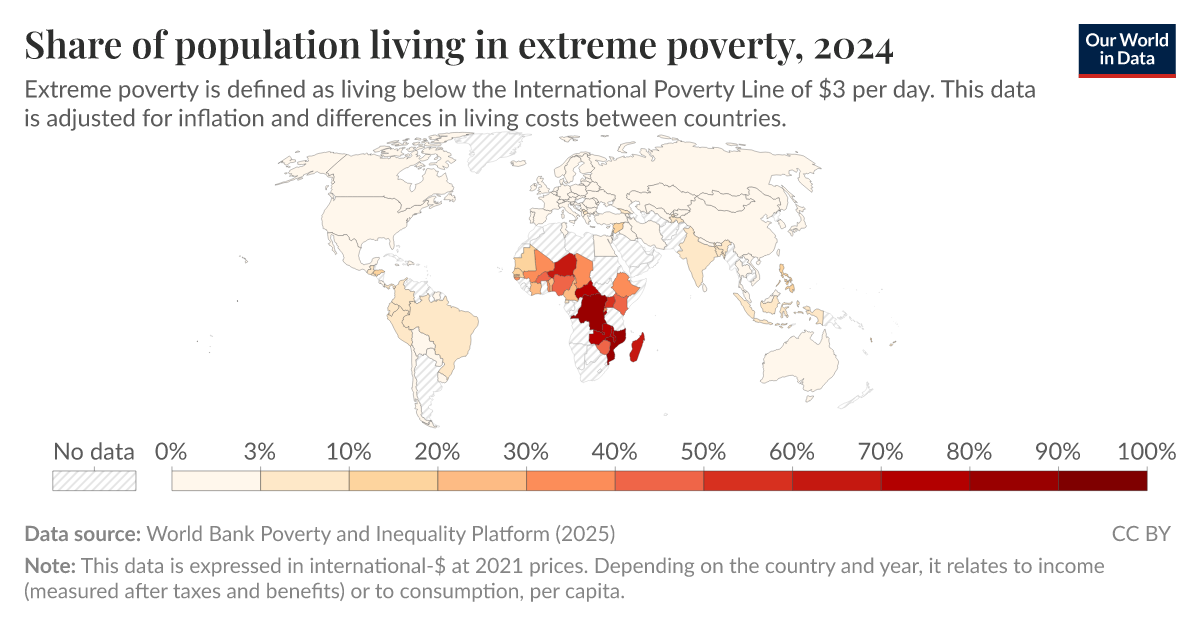
The World Bank data shows that the percentage of people living in extreme poverty, defined as living on less than $3 per day, decreased by 77.0% globally between 1990 and 2019.
For decades, most of the world’s population experienced extreme poverty, but economic growth has driven a significant decline in recent years.
The World Bank and Our World in Data collaborate to track this poverty using household surveys from countries around the world, measuring income in wealthier nations and consumption in lower-income nations to account for non-monetary economic activity. The data relies on national surveys, which sometimes measure income and sometimes consumption, and the World Bank combines these measures to create a comprehensive global picture.
When countries change their survey methods, this can create breaks in the data, and the World Bank identifies these breaks to help users understand potential comparability issues. The organization also uses constant international dollars, adjusting for inflation and cost of living, to ensure accurate comparisons between countries and over time. The World Bank sets the International Poverty Line at $3 per day to provide a consistent standard for measuring poverty across nations.
This threshold represents a very low standard of living, reflecting the typical poverty lines used in the world’s poorest countries. The World Bank arrives at this line by using the median poverty line of low-income countries, ensuring it reflects the realities of those experiencing the most severe poverty. Data is currently available through 2026, with the next expected update in December 2023.

