Human brains track sentence structure differently than AI models

Headline and summary by local AI
Researchers at the University of Melbourne found that human brains process the grammatical roles of sentences in ways that large language models do not mimic.
James Fodor, Carsten Murawski, and Shinsuke Suzuki conducted the study to determine if artificial intelligence truly understands language like humans or simply mimics it. They used functional magnetic resonance imaging (fMRI) to observe how 30 native English speakers responded to 108 single-clause sentences. The team designed the experiment to isolate sentence structure from vocabulary.
They used pairs of sentences that shared almost all words but swapped the roles of the actors, such as "the dog bit the man" versus "the man bit the dog." They compared brain activity to four different models, including word-averaging models, transformer models like those used in ChatGPT, a graph-based model, and a hybrid model that tags semantic roles.
The results showed that while AI models performed well when sentences used different words, they struggled to match brain activity when the vocabulary remained the same but the roles swapped. The transformer models showed a negative relationship with brain activity in these cases because they treated the swapped sentences as nearly identical. In contrast, the hybrid and graph-based models aligned more closely with the brain, which treats the "who did what to whom" structure as a primary factor of meaning.
Fodor explained that these findings suggest large language models do not understand language in a fully human-like way. The study showed that while these models can perform tasks to a human level, their internal representations of syntax and semantics differ from the human brain. The researchers noted that these differences might lead to unexpected behaviors when models are deployed in real-world tasks.
Selected and summarized by local AI How we work
More in Discovery
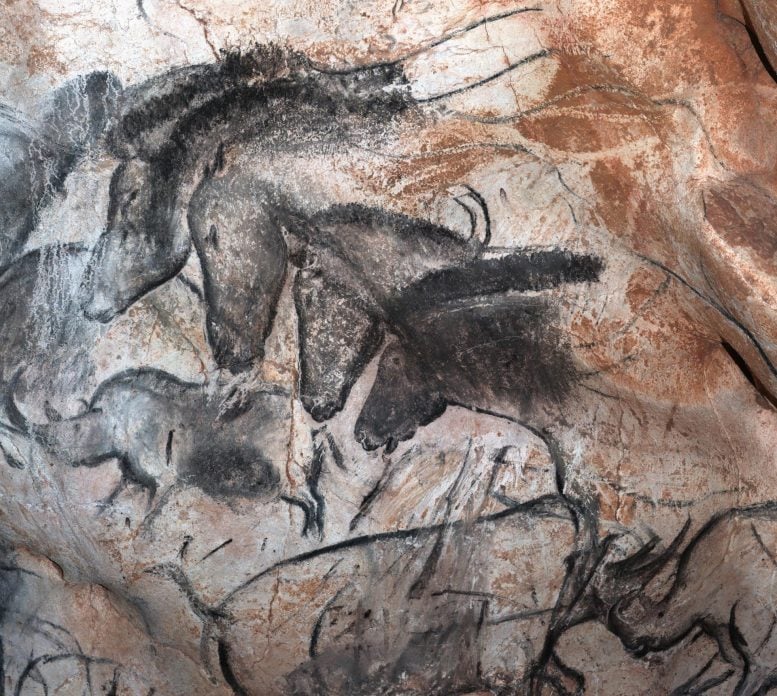
Mineral varnish helped preserve 37,000-year-old cave art in France
scitechdaily.com · 11 Nov 2026

A new psychoanalytic approach addresses African diaspora trauma
brasildefato.com.br · 10 Nov 2026

Two artists explore land and culture through healing art at Bundanon Art Museum
thesaturdaypaper.com.au · 13 Nov 2026