Prehistoric rock art found in Catalonia cave hidden by modern graffiti
Headline and summary by local AI
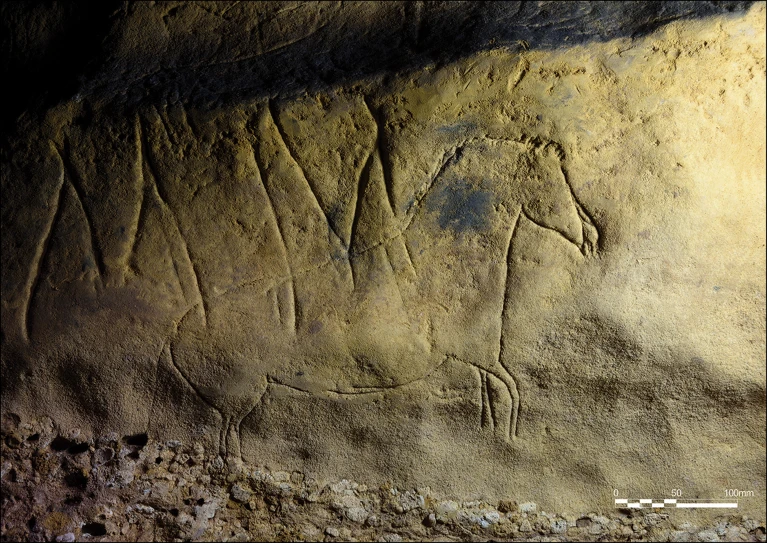
Researchers Josep Maria Vergès Bosch and Míriam Salas-Altès identified prehistoric rock art in the Cova de la Font Major cave in the province of Tarragona, Catalonia.
The discovery challenges the long-held belief that the region lacked Paleolithic art. While much of Europe's Paleolithic art is concentrated in places like Cantabria and Andalusia, experts previously assumed Catalonia was largely empty of such works due to a perceived lack of human presence during the Magdalenian period.
The researchers found the carvings during an excavation in 2019. The art remained hidden for over sixty years because thousands of tourists had visited the cave and covered the ancient markings with modern names and dates. The carvings are located about 250 meters from the current entrance in small galleries near an underground river. The authors identified 280 graphic elements, including 55 animal figures such as horses, deer, and an bear.
The artists used a technique of simple incision and scraping to create figures measuring between 15 and 45 centimeters in length. The researchers noted that the prehistoric artists likely used the natural geology of the cave to create a sense of movement. Some figures appear to be an animation or a film, with animals shown with lowered heads or repeated limbs to suggest running.
Based on radiocarbon dating and stylistic analysis, the researchers date the art to approximately 26,000 years ago.
Selected and summarized by local AI How we work
More in Discovery

Gender-inclusive language fails to reduce political leadership stereotypes
phys.org · 10 Nov 2026

Wiesbaden museum returns human remains from Dutch colonial era to Indonesia
deutschlandfunk.de · 10 Nov 2026
Archeologists find unique golden bear figurine in ancient Kazakh grave
n1info.ba · 12 Nov 2026