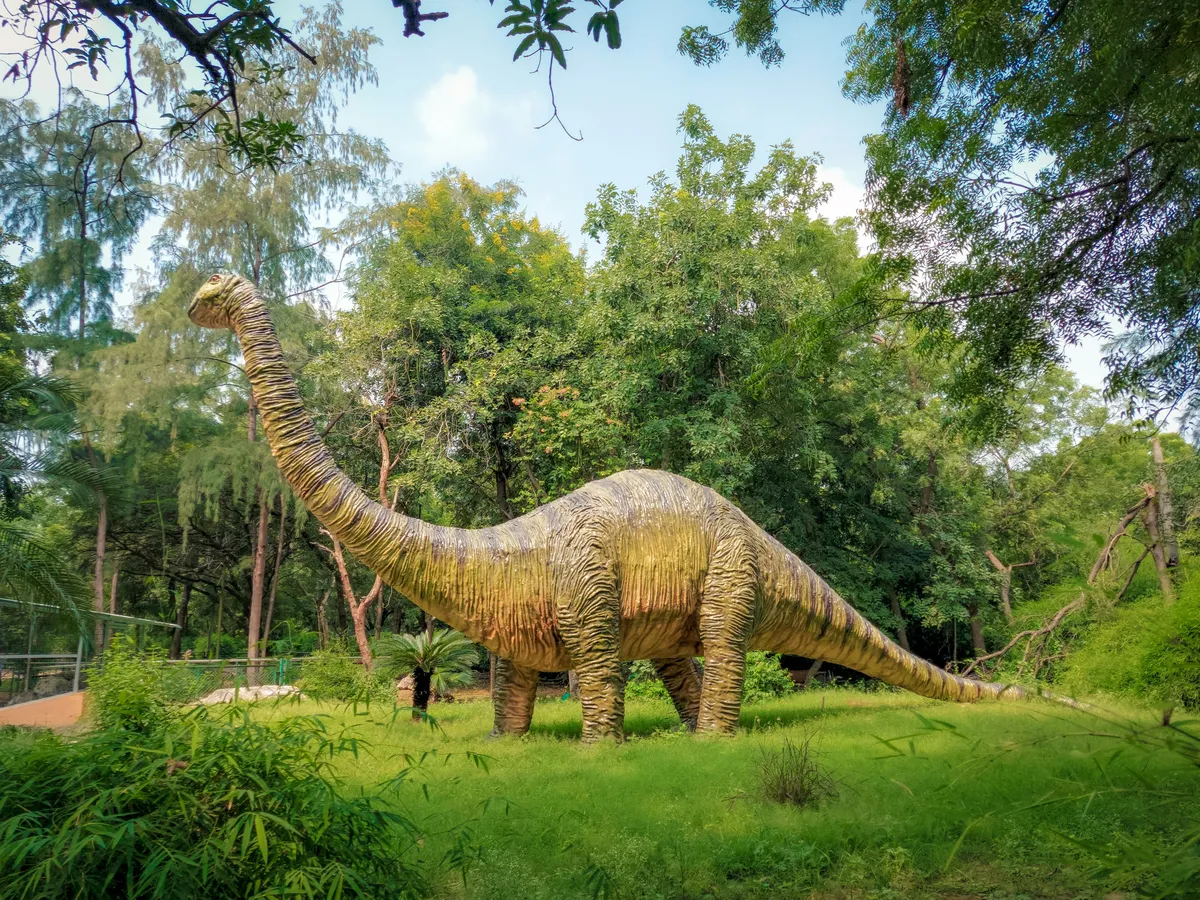
Diplodocus discovery redraws dinosaur distribution map

Summary and headline written by AI from the source article. How we work
Paleontologists in Teruel, Spain, uncovered fossils proving that Diplodocus, a long-necked dinosaur, lived in Europe as well as North America.
For years, scientists believed all Diplodocus specimens originated from the Morrison Formation in the United States. Researchers from the Teruel-Dinópolis Paleontological Complex Foundation discovered 14 tail vertebrae and other bones in La Tejería, challenging this previous understanding.
This European find represents one of the most complete Diplodocus skeletons ever found in Europe, providing new data about dinosaur geography during the Late Jurassic period, roughly 150 million years ago. The team identified the dinosaur through careful analysis, noting similarities to known North American species.
Sergio Sánchez Fenollosa, a paleontologist involved in the research, explained the discovery offers strong evidence that dinosaurs moved and exchanged species between North America and Europe across the early Atlantic Ocean during the Late Jurassic. This exchange impacted Iberian ecosystems of the Mesozoic era and broadened the understanding of European Jurassic sauropods, large, four-legged plant-eaters with long necks and tails.
Further finds in the Iberian Peninsula, including along the Portuguese coast and in the Iberian mountain range, continue to reveal a diverse dinosaur population.