Ugandan farmers promote indigenous crops to build climate resilience

Headline and summary by local AI
Participatory Ecological Land Use Management (PELLUM) and other agricultural organisations organized a traditional seed and food festival in Kampala to encourage farmers to grow indigenous crops.
The event, held between October 26 and 30, aimed to preserve local heritage and promote food security through traditional farming methods. Edward Mukiibi, the chairperson of the PELLUM board, stated that indigenous farming systems are more environmentally friendly than commercial methods because they require less water, fertiliser, and pesticides.
These methods also help maintain soil biodiversity. Farmers across Uganda are now forming groups to establish markets for indigenous foods, creating local food chains that reduce dependence on global imports and help mitigate climate change impacts. Different regions of Uganda maintain unique traditional food cultures. In the Tooro region, the Batooro people use millet and cassava flour to make bread served with bean sauce.
In the West Nile region, communities like the Alur and Lugbara rely on millet, sorghum, and fish from the River Nile and Lake Albert. To preserve these traditions, some communities hold annual festivals where elderly women teach young girls how to prepare traditional meals. Farmers use various methods to preserve seeds, such as keeping millet in smoke-filled kitchens or using portable silos provided by development partners.
While some groups have moved toward commercialisation and hybrid crops, these initiatives seek to restore the consumption of nutritious local foods that have faded among younger generations.
Selected and summarized by local AI How we work
Belonging: Community bonds, rootedness, and living cultural practices and heritage.
More in Belonging

Community collaboration revives crops project at Montgomery County Fair
farmprogress.com · 13 Nov 2026
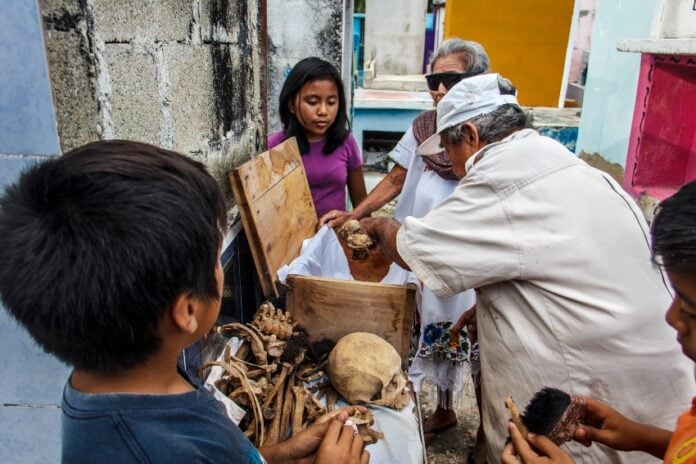
Families in Pomuch clean and dress ancestors for Day of the Dead
mexiconewsdaily.com · 4 Nov 2026

Perchtoldsdorf residents celebrate a UNESCO heritage harvest festival dating to 1422
krone.at · 7 Nov 2026