Ancient Roman Concrete Still Stands After 2000 Years
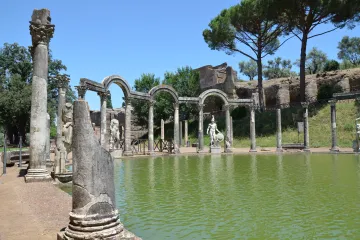
Archaeologists in Italy analyzed concrete from the ruins of Emperor Hadrian’s latrine and discovered the key to its remarkable durability, a process called carbonation. While modern concrete degrades within a century, Roman concrete structures have endured for millennia, baffling engineers for years.
The research builds on prior work from MIT showing that Roman concrete can self-repair when cracks form, dissolving calcium fragments to fill gaps with new mineral deposits. This latest study focused on a concrete slab from Hadrian’s villa, revealing that carbonation, a reaction between volcanic ash, lime, and air, created a mineral network that sealed pores and blocked damaging chemicals.
Volcanic rock fragments also played a role, strengthening the concrete at their intersections with lime. Researchers hope to apply these findings to develop more sustainable and self-healing modern concrete, addressing the growing concerns about the lifespan of current infrastructure. The longevity of Roman concrete offers a pathway to reduce maintenance and increase the resilience of construction materials.
Surfaced by the Discovery lens — one of the vital signs ovr.news reads.
How we evaluated this
AI summary
read the original for the full story — Read on ct24.ceskatelevize.cz . How we work →