Researchers create agricultural network to boost farming in Tibet

Headline and summary by local AI
Researchers from the Chinese Academy of Sciences (CAS) established the Lhasa Farmland Ecological System National Field Observation and Research Station to improve agriculture and livestock farming in the Tibetan Autonomous Region.
Since its founding in 1993, the station has expanded its influence through a multi-point network that links various demonstration bases across the region. The station focuses on monitoring ecological systems while providing practical technology to local farmers and herders.
The team developed a circular agricultural chain in Linzhou County to address the shortage of fodder for livestock. Because natural grasslands in the region are fragile and produce low yields, researchers promoted a model of planting artificial forage in fertile river valleys. This method allows a single acre of land to produce many times more fodder than natural grasslands, which helps protect the broader ecosystem from overgrazing.
Scientists also introduced double-cropping techniques and solar-powered irrigation systems to help remote areas with limited electricity. The station's work has directly increased the income of over 4,400 local households. By creating 32 demonstration bases, the project helped residents earn more by promoting high-yield grass varieties and organic fertilizer production. In some areas, the station established a technology courtyard to connect scientists, government officials, and local businesses.
These efforts transformed raw materials into processed goods, such as selenium-enriched grass biscuits, which helped solve the problem of fodder shortages during the winter and spring months.
Selected and summarized by local AI How we work
More in Solutions

Côte d’Ivoire permits net and trap fishing on four lakes after biological rest
beninwebtv.com · 4 Nov 2026
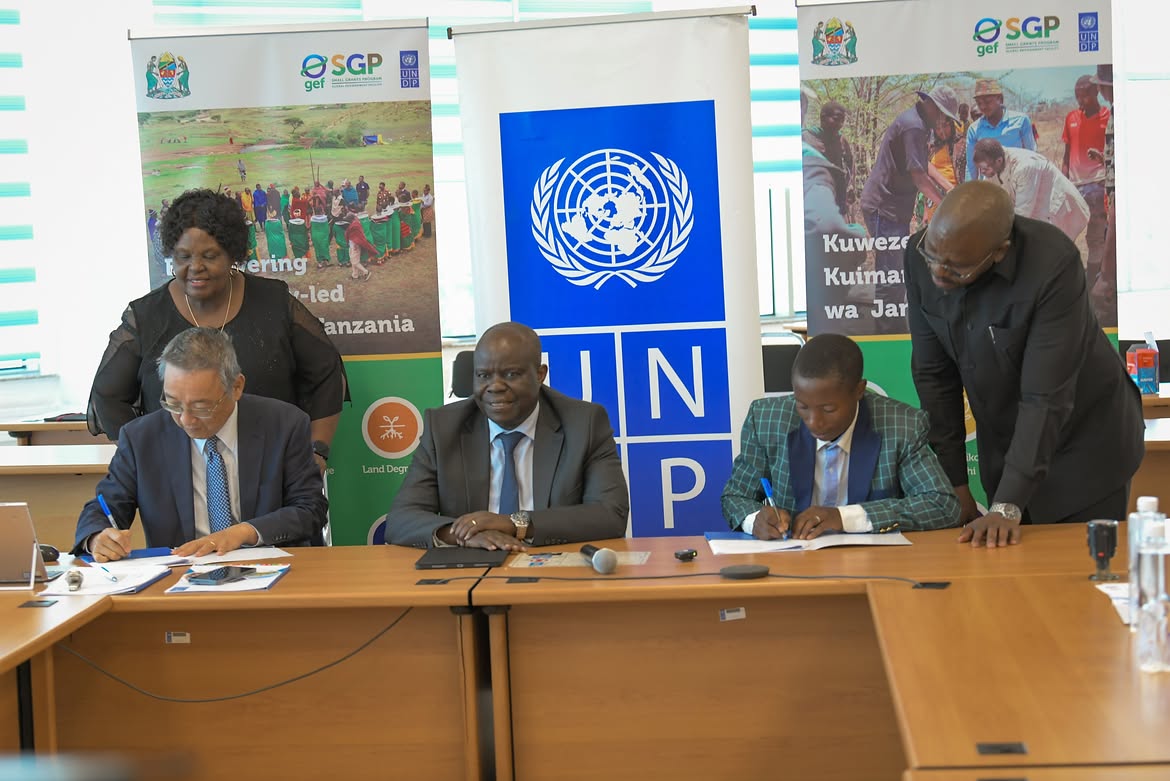
United Nations Development Programme funds Tanzanian conservation projects
dailynews.co.tz · 8 Nov 2026

Kenya doubles electricity access through renewable energy expansion
welt.de · 11 Nov 2026