Central Asia Expands Regional Cooperation
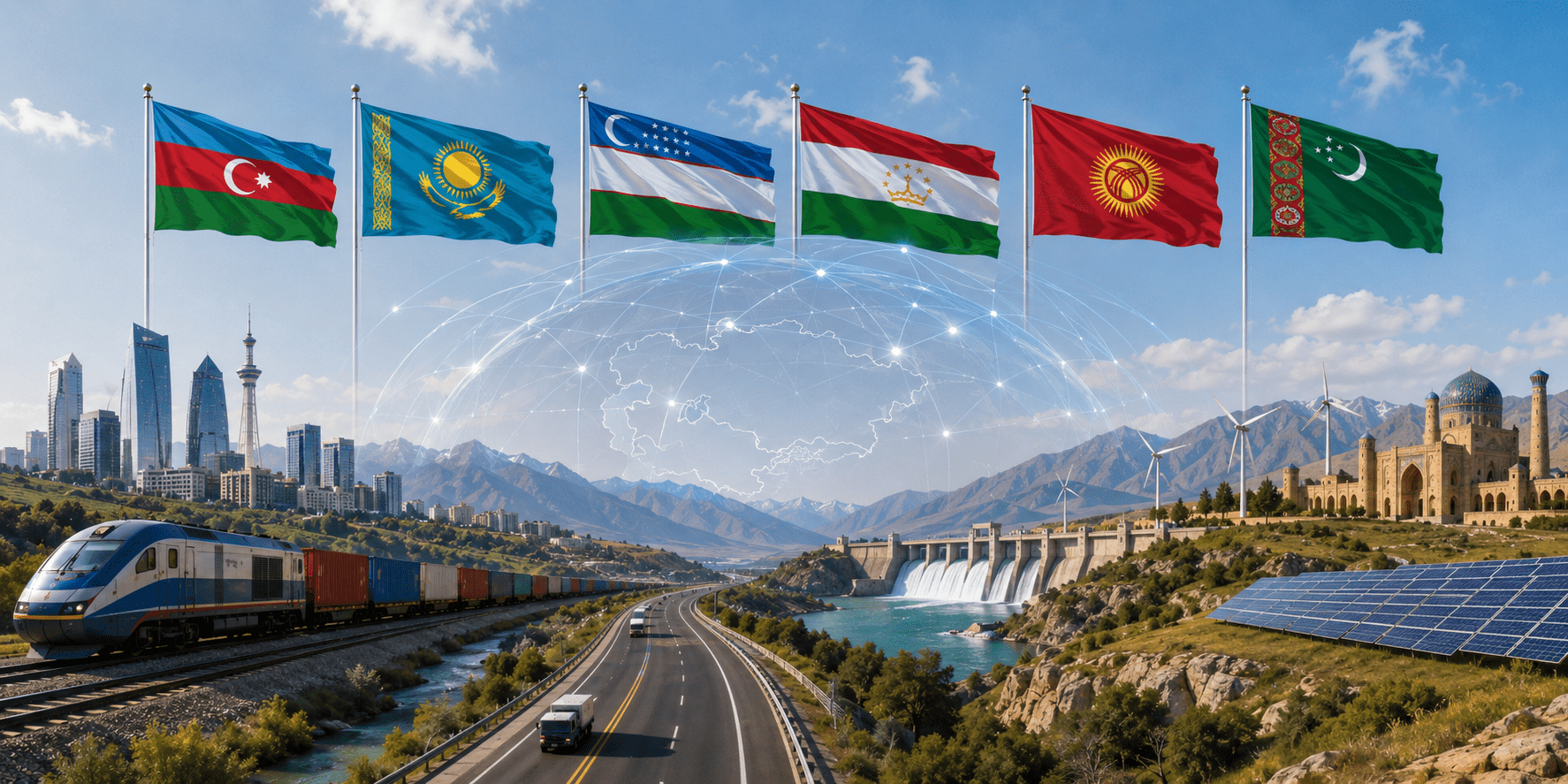
Why this is here: Shipping goods along the Middle Corridor—a developing trade route through Central Asia—can reduce transit times between China and Europe to roughly 13 to 21 days, compared to 35 to 45 days via the Suez Canal.
Analysts observe Central Asian nations increasingly acting with shared interests, moving beyond being a space for external power competition. For decades, the region—Kazakhstan, Kyrgyzstan, Tajikistan, Turkmenistan, and Uzbekistan—was seen through the lens of Russia, China, and the United States. Now, these countries are collectively forming a transit hub between Europe and Asia with a combined GDP exceeding $650 billion.
This coordination develops through transport, energy, and investment. Azerbaijan’s participation strengthens the Middle Corridor—a route offering 13 to 21 day transit times between China and Europe—though challenges with capacity and customs persist. Joint projects like the Kambarata HPP-1 in Kyrgyzstan signal a shift toward shared resource management.
The region aims for a flexible model of cooperation prioritizing national sovereignty over rigid supranational institutions, similar to ASEAN. Kazakhstan plays a key role in facilitating dialogue, but inclusivity remains vital for the framework’s long-term success. While differing priorities and sensitive issues like water management still exist, the trend points toward greater coordination where interests align.
Surfaced by the Solutions lens — one of the vital signs ovr.news reads.
How we evaluated this
AI summary
read the original for the full story — Read on timesca.com . How we work →