Kazakhstan Hosts Symposium on Golden Horde
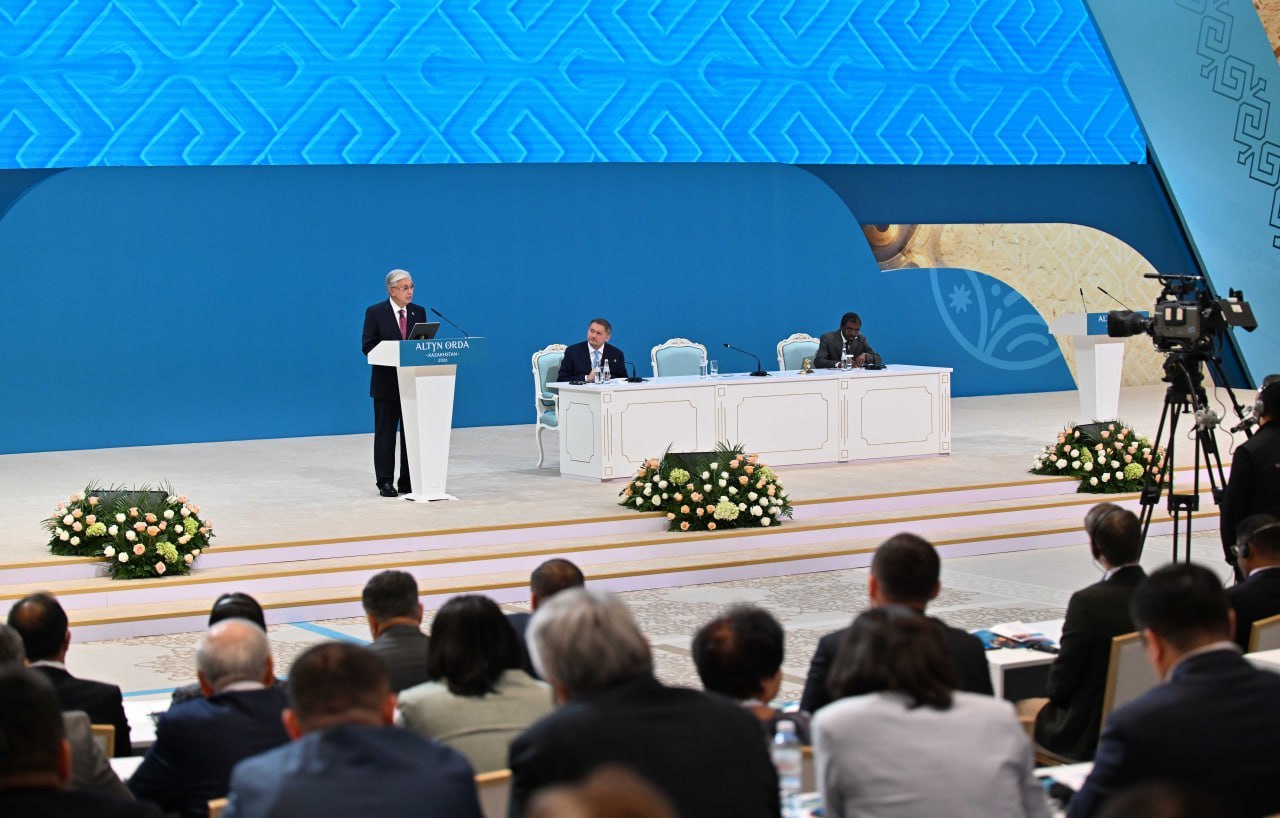
Why this is here: Horses were first domesticated about 5,500 years ago near the Botai settlement in present-day northern Kazakhstan, a detail highlighted during the symposium on the Golden Horde.
More than 300 scholars, including 120 from abroad, convened in Kazakhstan’s capital this week for a symposium focused on the Golden Horde. The event, held under UNESCO patronage, signals Kazakhstan’s effort to reshape its national identity by emphasizing connections to the nomadic empires of the Eurasian steppe. President Kassym-Jomart Tokayev opened the symposium, highlighting the Golden Horde’s historical influence and its role connecting East and West.
The symposium examined the Golden Horde—originating from Genghis Khan’s empire—as a sophisticated model of statehood, rather than a “backward” society. Archaeological evidence suggests horse domestication occurred near present-day northern Kazakhstan around 3700-3100 BCE. Though the Golden Horde fragmented into successor states by the 15th century, its legal and administrative traditions endured, preserved through oral histories and traditions like the zhyrau steppe bards.
Kazakhstan’s renewed focus on this history began with former President Nazarbayev’s “Spiritual Renewal” program in 2017. Tokayev has since deepened this effort, establishing an institute dedicated to studying the Ulus of Jochi. The institute will distribute scholarly works on the Kazakh Khanate in 2026, aiming to redefine Kazakhstan’s history beyond Soviet interpretations.
Surfaced by the Discovery lens — one of the vital signs ovr.news reads.
How we evaluated this
AI summary
read the original for the full story — Read on timesca.com . How we work →