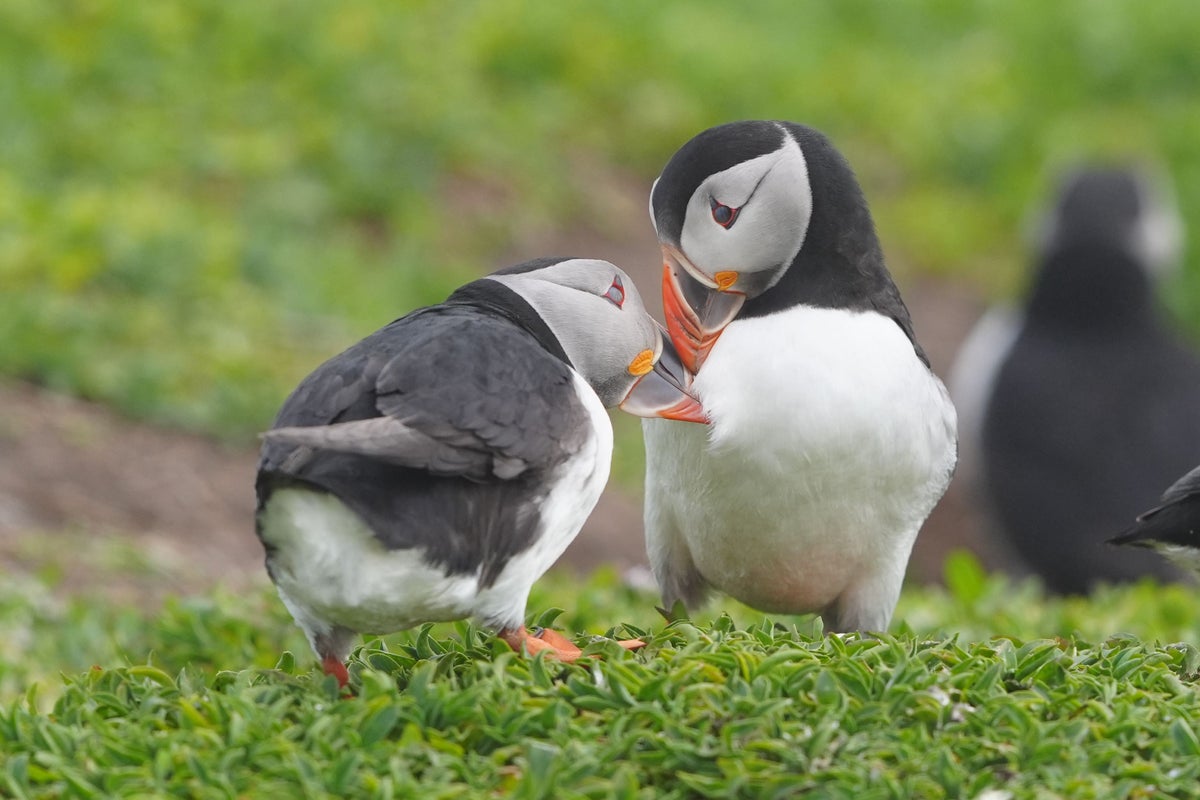
Severe winter storms reduce puffin populations on the Farne Islands
Headline and summary by local AI
The National Trust reported a decline in breeding puffin numbers on the Farne Islands, a sanctuary off the coast of Northumberland, England, following a harsh North Atlantic winter.
Three severe storms caused a major seabird wreck, leaving thousands of birds dead or dying on beaches across Europe. More than 38,000 seabirds were stranded along the Atlantic coasts of Spain, Portugal, and France, while hundreds of puffins washed ashore in south-west England.
Conservationists say these events demonstrate how extreme weather, driven by human-caused climate change, makes seabirds vulnerable. A developing "super" El Nino climate phenomenon in the Pacific may cause further unsettled winter conditions. The survey showed that breeding pairs of Atlantic puffins fell by 12 per cent from 38,559 last year to 33,939 this year. Other species also saw significant drops, including European shags, which fell by 42 per cent, and Arctic terns, which dropped by 27 per cent.
Long-term monitoring by the National Trust shows that puffin numbers have declined by more than a fifth since 2018. Despite the overall decline, some species showed signs of recovery. Black-headed gulls increased by 55 per cent after being affected by avian flu in 2022. Additionally, more puffin chicks survived to fledging this year than in previous years. Rangers are currently investigating why puffin numbers increased slightly on Inner Farne to help manage and protect breeding habitats across the islands.
Selected and summarized by local AI How we work
Recovery: Ecosystems recovering, species returning, nature thriving or newly found, and protection already in force.