Tuna Evolution Not Solely Driven by Dinosaur Extinction
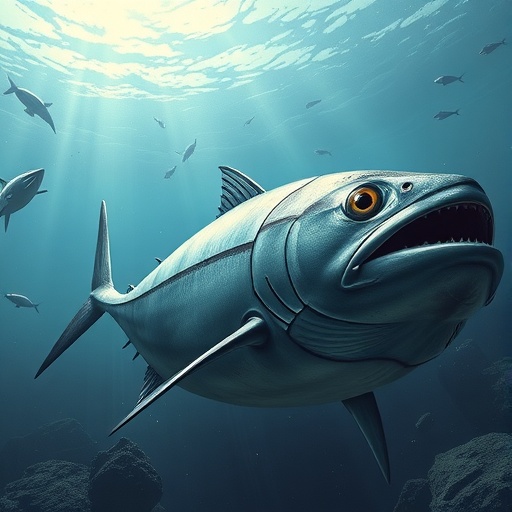
Yale researchers investigated how the asteroid impact 66 million years ago affected the evolution of tuna and mackerel, known as Scombridae. The team reconstructed the evolutionary history of this fish family using genetic data and fossils, challenging the idea that the extinction of dinosaurs immediately created an opportunity for tuna-like predators to thrive.
Instead, the study found that traits like large body size and endothermy, the ability to regulate internal temperature, evolved later and independently across different lineages of Scombridae. At least two of three instances of endothermy developing occurred 10 to 15 million years after the asteroid impact.
The researchers also discovered that endothermy and gigantism didn’t necessarily appear together, suggesting tuna’s warm-blooded metabolism and speed didn’t emerge as a single adaptation. Understanding the evolution of tuna physiology could have implications for conservation efforts, especially for overfished Atlantic bluefin tuna, and potentially inform research into human metabolic conditions.
Surfaced by the Discovery lens — one of the vital signs ovr.news reads.
How we evaluated this
AI summary
read the original for the full story — Read on bioengineer.org . How we work →