Jewish collectors built Berlin’s Van Gogh Collection, And lost it
Summary and headline written by AI from the source article. How we work
German Jewish collectors amassed a large number of Van Gogh paintings in the early 20th century, making Berlin a hub for his work. By 1914, around 150 Van Gogh paintings resided in private German collections, the majority owned by Jewish families or those of Jewish heritage.
After 1933, Nazi persecution forced these collectors into exile or led to their murder, resulting in the confiscation of their art.
An exhibition at Hamburg’s Bucerius Kunst Forum, “From Monet to Picasso: Jewish Art Collectors in Germany,” explores the contributions of these collectors and the fate of their holdings. The exhibition focuses on 15 collectors who, by the 1930s, collectively owned over 30 Van Gogh paintings, many acquired through Jewish dealers like Paul Cassirer in Berlin and Justin Thannhauser in Munich. Following World War II, these artworks were scattered globally, and the Hamburg show attempts to reunite some of them.
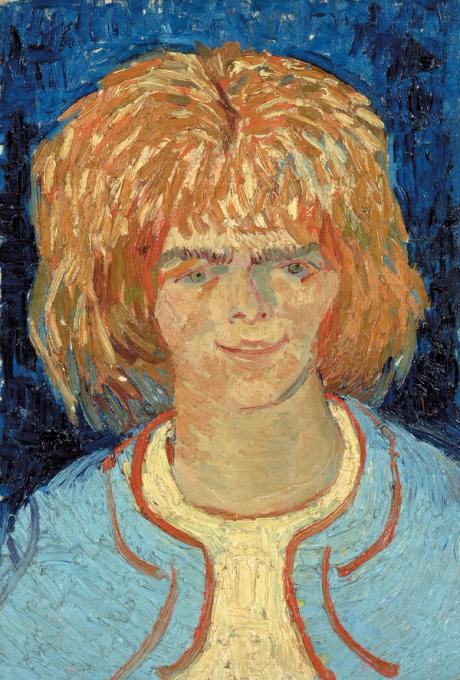
However, the exhibition includes only one genuine Van Gogh, Girl with Ruffled Hair, due to difficulties securing loans. The painting Girl with Ruffled Hair passed through several owners, including Tilla Durieux, Margarete Oppenheim, and her stepson Kurt, who managed to export it to Switzerland before emigrating. Another significant Van Gogh, Trees with Ivy, was confiscated by German forces in 1941 and photographed with Hermann Göring, after which it disappeared and is presumed lost.
The exhibition also features a painting initially believed to be a Van Gogh, Cornflowers in a Vase, that was later revealed to be a fake, but remains with the descendants of its original owner, Georg Hirschland, who fled Germany in 1938.
How we evaluated this
More in Discovery

Senegalese musicians bridge cultures through song
seneweb.com · 12 Sept 2026

Monkeys hunt for meat when fruit is scarce, revealing clues to human ancestors’ diets
nationalgeographic.nl · 9 Sept 2026

Ancient altar and chest in Uzbekistan offer clues to Zoroastrian ancestors’ rites
news.google.com · 15 Sept 2026