Families plant mangrove saplings on Qeshm Island to combat forest loss
Headline and summary by local AI
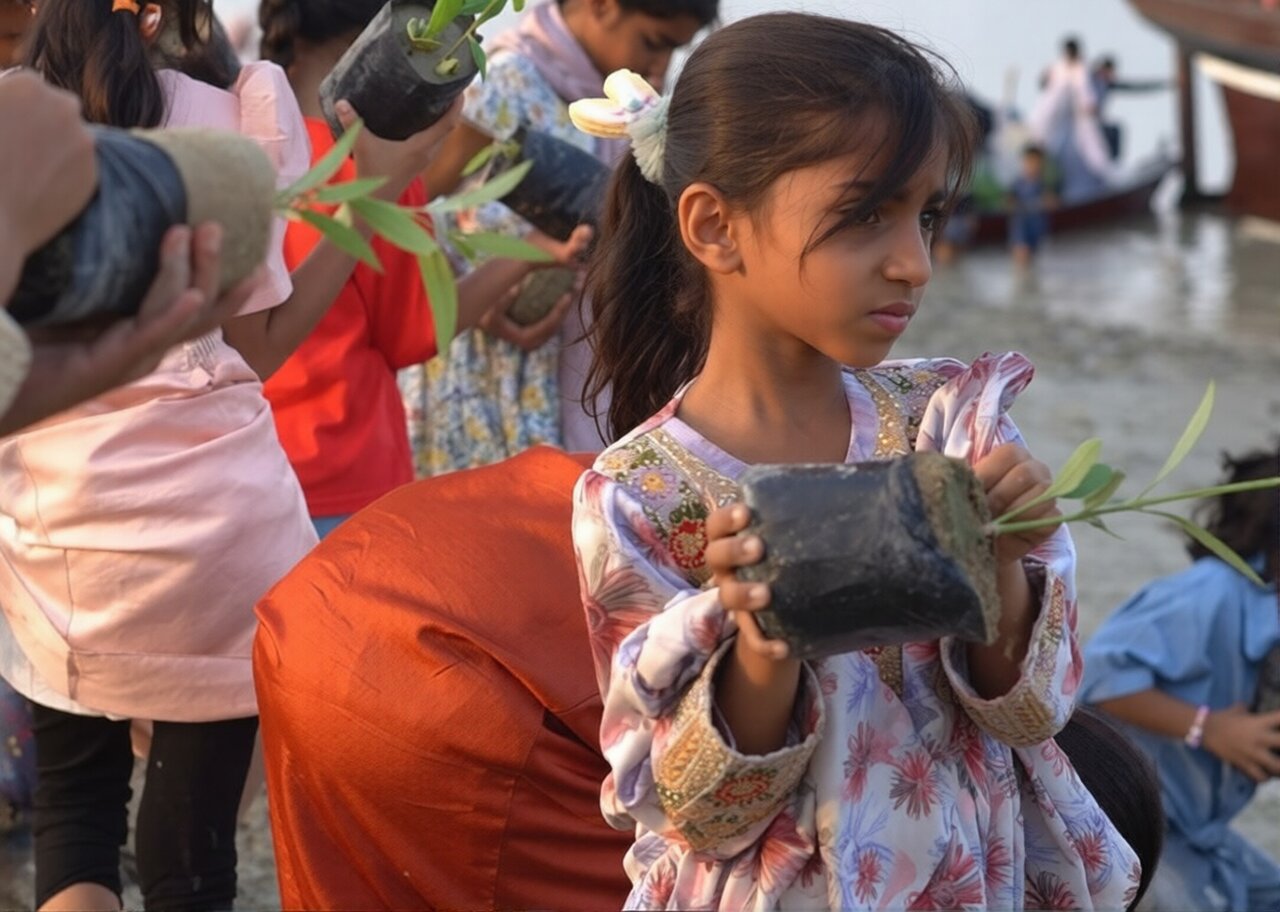
Families in Soheili village on Qeshm Island in Iran planted 2,000 mangrove saplings to promote environmental conservation.
Children in the village spent two months caring for the seedlings at home before joining their mothers and other relatives to place them in designated forest areas. The community organized the event alongside entertainment programs for children, a painting competition, and a cooking contest. The initiative aims to teach the younger generation about sustainable habits and the importance of protecting local natural resources.
These mangrove forests, known as Hara, serve as vital ecosystems that protect coastal communities from storms, support biodiversity, and act as carbon sinks. However, global mangrove coverage has halved in the last 40 years, and the International Union for Conservation of Nature has classified the forests in the Persian Gulf as vulnerable. Shahram Fadakar, an official with the Department of Environment, stated that the agency is developing a national action plan to restore these ecosystems.
The department has already completed several restoration projects along Iran's southern coasts, including planting 30,000 saplings in Khor Soltani and 3,250 saplings along the Bahmanshir coast. Fadakar noted that these forests are critical blue carbon ecosystems that can store 10 to 50 times more carbon than terrestrial forests.
Selected and summarized by local AI How we work