Road work uncovers medieval pottery in Tbilisi, Georgia
Summary and headline written by AI from the source article. How we work
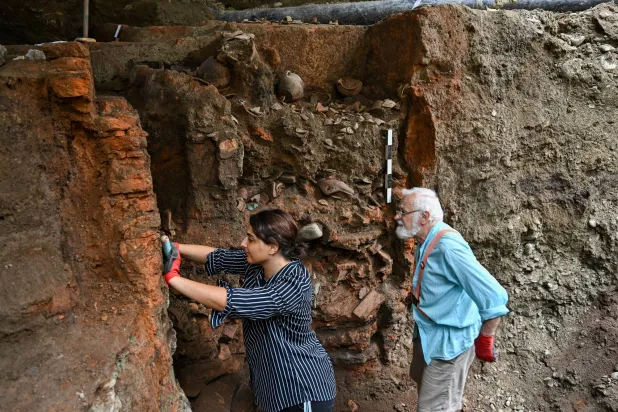
Construction crews working on Rustaveli Avenue in Tbilisi, Georgia, discovered archaeological treasures six meters below the main street.
The roadwork, intended to improve pedestrian access and signage, initially frustrated residents due to traffic disruptions and damaged streets. However, the project also revealed a 10th-century pottery workshop, among the oldest medieval artifacts found in the Georgian capital. David Lordkipanidze, director of the National Museum, noted the discovery wasn’t entirely surprising given Tbilisi’s rich archaeological history.
Initial studies of the pottery’s designs suggest the pieces date to the 10th and 11th centuries, a period when Tbilisi was under Arab rule and a key stop on the Silk Road. Lordkipanidze explained that Tbilisi has historically been a multicultural center and a regional economic hub, having been controlled by the Umayyad Caliphate of Damascus, the Abbasid Caliphate of Baghdad, and the powerful Seljuk Empire during the medieval period.
The artifacts will undergo 3D scanning and detailed examination at the National Museum. Tbilisi’s name, meaning “warm place” in Georgian, refers to the hot sulfur springs originating in the surrounding mountains and now partially exposed due to the renovations.


